Math 37 - Lecture 4
Collecting Data
Bias = A study is biased if it systematically favors certain outcomes.
Examples: Phone-in polls, Convenience samples (mall, oranges)
Selecting a Representative Sample of Apartments
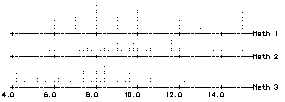
Wanted to select a representative sample of residences. First we guessed what the average was, then we took a sample of 5 using our own judgment, then we took a random sample of five using Table B.
How do the 3 pictures compare?
How are the values spread out?
Where are the values centered?
Population average:
Is there evidence of bias?
Were samples with methods 1 or 2 representative of the population?
What did increasing the sample size accomplish?
Sampling Error - Did something wrong when selected the sample.
Convenience Sample, Voluntary Response, Bad Sampling Frame
To eliminate sampling error and bias - use random sampling!
Other Sources of Error
Random Sampling Error - Is still a random chance will find a difference between the sample and the population (e.g., average size of 12.4). However, can measure how much of this error we expect there to be!
Margin of Error/Precision/Variability
Def: How close is the sample value to the population value.
How much sample values differ from each other.
How did the spread change from method 1 to method 2?
How did the amount of bias change from method 1 to method 2?
First, get an unbiased sample, then, to control amount of random sampling error, determine sample size.
Example Are 1.2 million voters in New Mexico, 12.5 million voters in Texas. If I take a poll of 2500 voters in each state, which poll will be more "accurate"=higher precision?
- Choosing beads from the jar
- Sending NCAA surveys to UOP students vs. Ohio State students
Does random sampling solve all our problems?
Nonsampling Error - Not related to selection of sample
Missing Data, Response Errors, Processing Errors, Untruthful
To reduce nonsampling error:
- Insure confidentiality (e.g. randomized response)
- Watch choice of wording (e.g. collided vs. contacted)
- Change order of choices (e.g. candidate names)
- Give background material/encourage unsure response
- Appearance of interviewer
- Use "placebos"=empty treatment to reduce placebo effect
- Try to ensure realism
Hawthorne effect=behave differently when watched
Review: Random Sampling vs. Treatment randomization